

Relationship Recovery Process (RRP)
Individual and Groups
Developed by Amanda Curtin and popularized by Patrick Teahan, the Relationship Recovery Process (RRP) is a six-month, trauma-informed group program that helps adults heal the lasting effects of childhood and relational trauma.
At the heart of RRP is the understanding that because relational wounds occur in relationships, healing can also happen through safe, supportive connection with others.
RRP focuses on strengthening the relationship between your Adult Self and Inner Child, helping you recognize and move beyond survival patterns that may have developed earlier in life - such as people-pleasing, perfectionism, emotional shutdown, difficulty setting boundaries, and painful relationship patterns.
Through increased self-awareness, self-compassion, and connection, you can begin responding to yourself and others with greater choice rather than automatically reacting from old survival patterns.
I have completed and continue to participate in ongoing advanced clinical training as an RRP practitioner with Marissa Boyce, BA, BEd, MA.
Follow Marissa and her work HERE or on Instagram.
I've also had the privilege of participating in an RRP group myself.
Experiencing this work from both sides - as a therapist and as a participant - has given me a deeper appreciation for what can happen when people feel safe enough to be seen, understood, and supported in relationship.
What is RRP?
RRP is an approach I deeply value, and I’m honored to offer this experience to others.
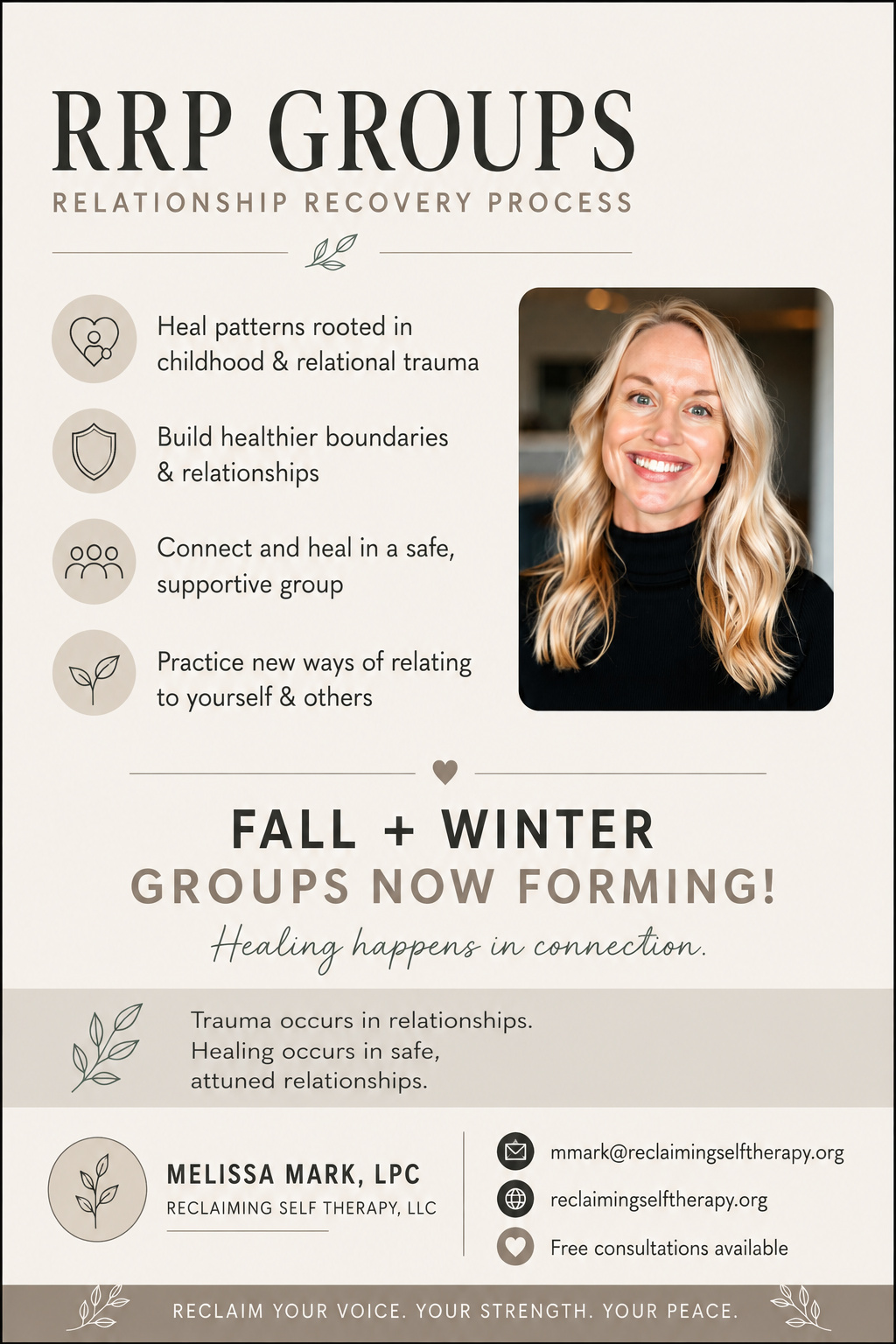
Is an RRP Group Right for You?
RRP Groups are designed for adults who have experienced the lasting effects of childhood relational trauma.
Whether you struggle with people-pleasing, difficulty trusting others, perfectionism, emotional overwhelm, or feeling disconnected from yourself, this program offers a supportive space for healing.
While participation in a group may feel vulnerable at first, many people find that healing alongside others with similar experiences provides a powerful opportunity for connection, relational repair, and lasting change.
If you're interested in learning more or exploring whether RRP is a good fit for you, I'd be happy to answer your questions and discuss the next steps.
You can also find more content and free resources at Patrick Teahan’s website here.
RRP Group Details
Duration: 6 months
Sessions: Weekly, 90 minutes
Group Size: Up to 8 participants
Format: In person or virtual
Commitment: Full six-month commitment to foster safety, trust, and lasting healing


What You Can Expect:
RRP groups offer a safe, structured, and supportive space to heal alongside others who understand the impact of childhood and relational trauma.
Throughout the process, you will have opportunities to:
Strengthen the connection between your Adult Self and Inner Child
Understand your patterns and how early experiences may still shape your emotions, relationships, and behaviors
Recognize old survival strategies such as people-pleasing, perfectionism, emotional shutdown, or difficulty setting boundaries
Build new skills for emotional regulation, boundaries, communication, and healthier relationships
Practice being seen and known in safe relationships rather than doing the work entirely on your own
Experience connection with others who may understand struggles that have often felt isolating

Not sure whether an RRP group is right for you?
If you've ever wondered whether your childhood experiences continue to impact your relationships, sense of self, or emotional well-being, I encourage you to begin with Patrick Teahan's Toxic Family Test (link below).
Many group members find it to be a helpful first step in understanding the patterns they want to heal.
How Toxic Is Your Family? Free Test | Patrick Teahan
Through education, guided exercises, experiential work, and connection with others, RRP provides an opportunity not only to understand your patterns, but to begin experiencing and practicing something different.
RRP can be a meaningful stand-alone experience or complement individual therapy, offering opportunities for healing that are unique to the group setting.